
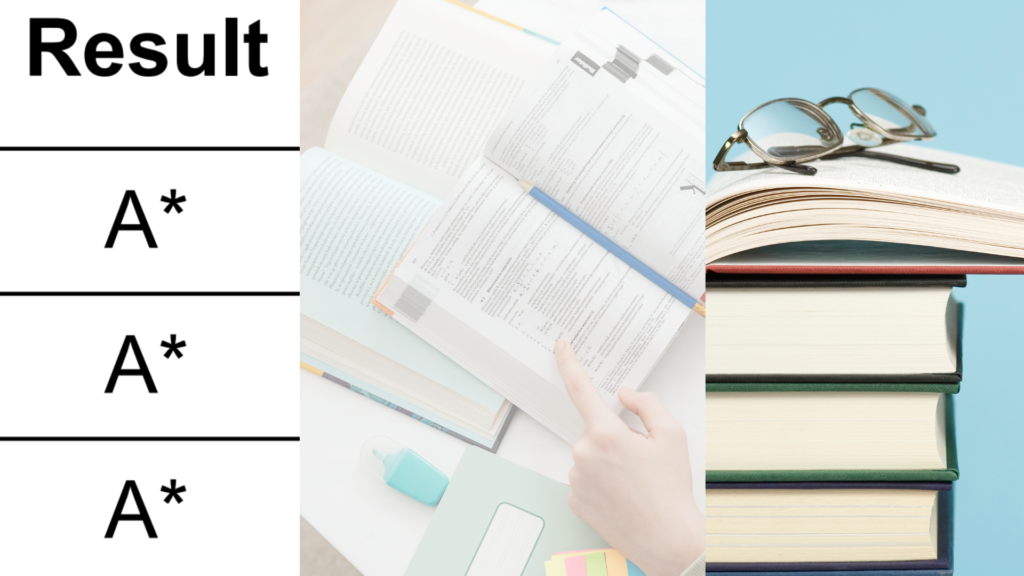
Hey, it’s Daniah, your tutor and social media editor at Babylon Tutors!
A-level results play a crucial role in determining eligibility for admission to universities and colleges. Moreover, they can be a game-changer in future job opportunities.
While everyone has their unique revision methods, I’m happy to share mine!
- Creating a realistic study schedule
You need to take into consideration your school schedule, the time required to understand or memorise topics, the complexity of subjects, breaks, and identifying the most effective study time for you. I dedicated approximately 2 hours each weekday to a single subject, excluding homework time. On weekends, an early start allowed for more extensive revision, covering all three of my A-level subjects. This involved activities such as completing past papers, creating study notes, and watching educational videos.
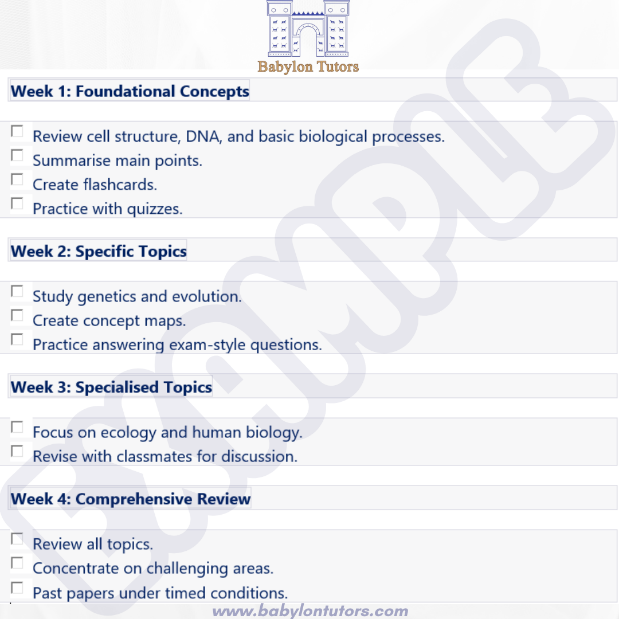
- Setting clear goals
Start each session with a to-do list. Break down study materials systematically, prioritise topics, and allocate specific time slots. For example, in Biology, I organised topics from challenging to easy, incorporating engaging activities like practice questions, flashcards, and mind maps. I’d always finish with a 30-minute review.

- Using the specification
This is a valuable tip that doesn’t always get the attention it deserves. Take the time to go through the official exam board’s specification, as it is a guide for what to expect in the exam.
To make the most of the specification, I used three highlighters: green, orange/yellow, and red. I’d highlight what I was confident in with green, based on my ability to recall information and answer exam-style questions. I’d use orange/yellow for areas that needed more work but where I had a basic understanding, and I reserved the red for topics that were unclear and required focused attention.
- Practising with past papers and mark schemes
Many students acknowledge the importance of practising with past papers, yet there’s often uncertainty about how to use them effectively.
Why are past papers valuable? The primary reason is to gain familiarity with the exam’s style and format. This can reduce anxiety and stress during the actual exam. Additionally, analysing past papers aids in recognising patterns and trends in the types of questions asked.
Mark schemes play a vital role in understanding the specific keywords examiners expect in answers. Understanding these expectations is crucial for avoiding mistakes and ensuring that maximum marks are secured.
So, how did I effectively incorporate past papers into my study routine?

- I avoided starting too early! Beginning too soon may be overwhelming, as you might lack sufficient knowledge and skills. I initiated my practice with topic-specific questions, gradually progressing as I built confidence.
- I always ensured a thorough revision of relevant topics before diving into the past paper.
- Initially, I practised with untimed conditions. I’d recommend breaking down the past paper into sections since they can be extensive.
- Mark schemes were my key to identifying mistakes and areas for improvement. Understand the keywords used and review examiners’ reports to see common mistakes made by students.
- Recognise how questions with higher marks are structured; for instance, a 16-marker question may not require an entire page of writing, but rather specific and concise answers.
- I reused the same past paper multiple times. Continued revision with the same paper allows for the identification of areas that need further attention.
- Here is my game-changer approach: I created notes based on mark schemes. This aids in revising key points outlined in the mark schemes.
- As confidence levels rose, I transitioned to practising with timed conditions.
So, there you have it – my A-level success secrets!
If you’re seeking further assistance on your A-level path, consider enrolling in our tutoring sessions to enhance your preparation and maximise your academic potential. We have two great offers for you:
- A free 30-minute trial session.
- Get 4 sessions for the price of 3!
For further information and study tips, we encourage you to visit our website and explore our social media accounts:
Instagram: @Babylontutors
Facebook: Babylon Tutors
TikTok: @Babylontutors
LinkedIn: Babylon Tutors
Stay tuned for more articles on our website, designed to assist you in your revision!