

Babylon Tutor’s UCAT Series: A Comprehensive Guide
It’s UCAT season again!
Every year, thousands of aspiring medical and dental students get ready to take the UCAT test. This time, let Babylon Tutors be your guide to mastering the UCAT. This series aims to enhance your understanding and skills, sharing secrets to acing the UCAT and much more. Stay tuned for more chapters, with one released every week!
Key information about the Quantitative Reasoning section of the UCAT
- This section evaluates a candidate’s ability to work with numerical data, perform calculations, and interpret information from tables, charts, and graphs.
- Efficient time management and quick problem-solving skills are essential to perform well in this high-pressure section of the UCAT.
The structure of the Quantitative Reasoning section of the UCAT
| UCAT Subtest | Questions | Test Duration | Score Range | ||
| Quantitative Reasoning | 36 | 25 minutes | 300 – 900 | ||
Question Types:
- Data Interpretation Questions:
- Tables
- Charts and Graphs
- Diagrams
- Numerical Calculations:
- Arithmetic Operations
- Percentages and Ratios
- Rates and Units
- Averages
- Word Problems:
- Real-Life Contexts
- Currency Conversion
- Geometry Questions:
- Area and Perimeter
- Volume and Surface Area
TOP tips and tricks to succeed in the Quantitative Reasoning section of the UCAT
- Practise simple calculations mentally to avoid wasting time using the on-screen calculator.
- Learn common conversions between percentages, decimals, and fractions.
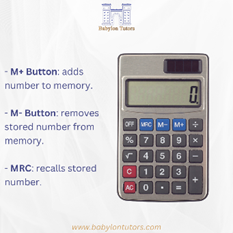
- Start using the on-screen calculator early during your timed QR practice sessions to become familiar with its functionality.
- Use the number pad on your keyboard to type in numbers into the calculator instead of clicking the numbers with a mouse, which is faster and more efficient.
- Use a whiteboard to jot down your workings. Always note your final answer as it might be needed for subsequent questions in the set.
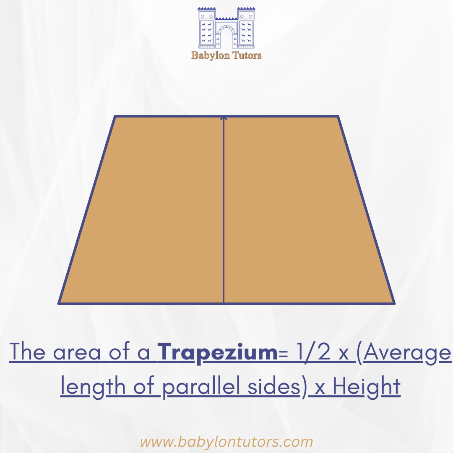
- Familiarise yourself with common GCSE topics that are often assessed in QR, including formulas for areas, volumes, and both simple and compound interest.
- With practice, you’ll get better at identifying questions that require multiple steps and take longer to complete. Make an educated guess, flag these questions, and move on to save time for easier questions that can be answered more quickly.
Key Learning Points
Common conversions:

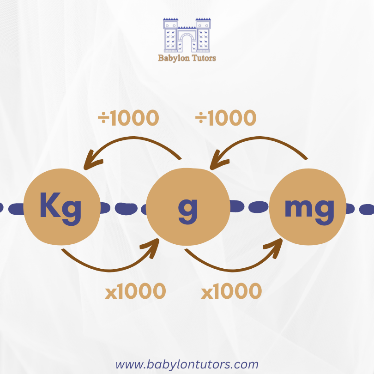
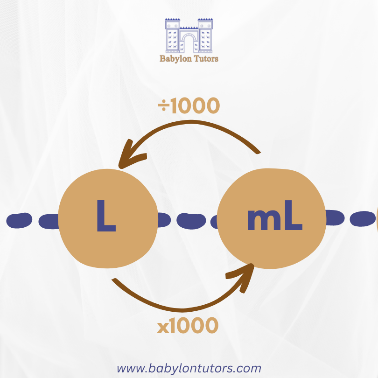
The on-screen calculator:
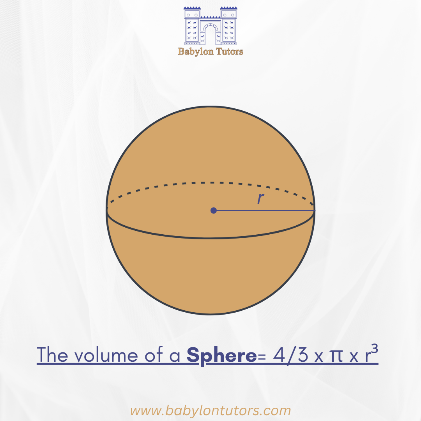
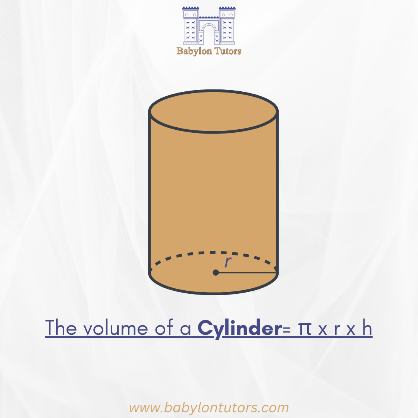
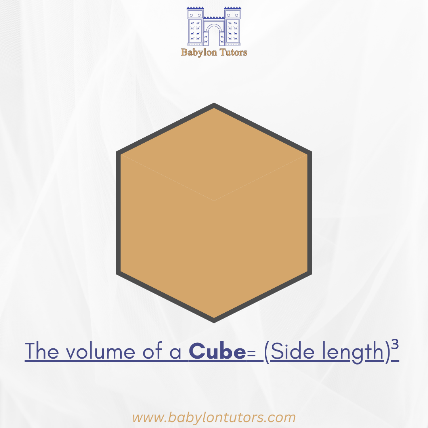
Key Formulas:





Volumes:
Percentages:
- Percentage= (Part/Whole) ×100
- Percentage Change= ((New Value−Old Value/ Old Value)/100
Ratios:
- Ration= Part 1/ part 2
- Simplifying Ratios: Divide all parts by the greatest common divisor.
Proportions:
- Direct Proportion: y=kx (where k is a constant)
- Inverse Proportion: y=k/x (where k is a constant)
Averages:
- Mean= ∑values/ number of values
- Median: Middle value in an ordered list. (If the list has an even number of values, the median is the average of the two middle numbers)
- Mode: Most frequently occurring value.
Interest:
- Simple Interest: I=P×r×t (I = Interest, P = Principal, r = Rate, t = Time)
- Compound Interest: A=P(1+r/n) nt (A= Amount, P = Principal, r= Annual interest rate, n = Number of times interest is compounded per year, t= Time in years)
Example Quantitative Reasoning questions
- The table below shows the number of books sold by a bookstore in four different months. What is the average number of books sold per month?
| Month | January | February | March | April |
| Books Sold | 120 | 150 | 90 | 180 |
A) 110
B) 135
C) 140
D) 155
- If the price of a shirt increased from $25 to $30, what was the percentage increase in price?
A) 15%
B) 18%
C) 20%
D) 25%
Answers:
- Total books sold = 120 + 150 + 90 + 180 = 540
Number of months = 4
Average = 540/4= 135
- Percentage Increase = ((30-25)/ 25) x 100 = 20%
Relevance to medicine & dentistry
The QR section is crucial for medical and dental school admissions as it reflects a candidate’s ability to handle numerical and statistical data, an essential skill in medical practice.
How can Babylon Tutors support you?
Look out for regular posts featuring handy tips and tricks on our social media accounts. Our aim is to share insights that will boost your confidence and performance on your test day.
Also, keep an eye out for regular updates as we’ll be introducing new content and resources to enhance your UCAT preparation experience!
Instagram: @Babylontutors
Facebook: Babylon Tutors
TikTok: @Babylontutors
LinkedIn: Babylon Tutors
Keep in mind, Chapter 8 is coming soon…